
Cocoon or Cacoon is answered directly: Cocoon is the correct spelling. The confusion arises from the double “o” sound. People often get confused between these two words because of their similar pronunciation. The correct spelling is used in various contexts to refer to a protective covering.
The mix-up between Cocoon and Cacoon is caused by the double “o” letter pattern. This pattern can be tricky to spell correctly. Readers will learn how to distinguish between the correct and incorrect spellings and understand the meaning of the word Cocoon. The guide will provide a clear explanation to help readers use the correct spelling confidently.
Quick Answer
The correct spelling is Cocoon. It has two “o”s, which can be tricky to remember.
| Correct | Incorrect |
|---|---|
| Cocoon | Cacoon |
What Does Cocoon Mean
Cocoon refers to a protective covering, often used for insects or a cozy, enclosed space.

The Role of Cocoon in Biology
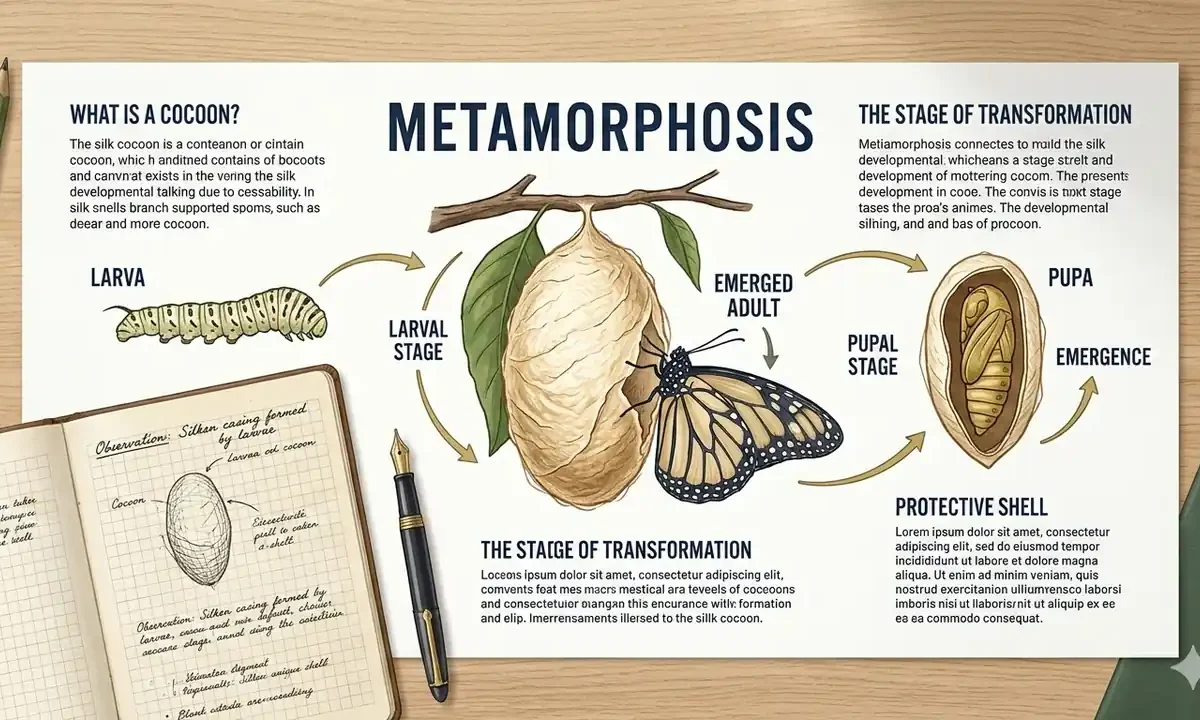
In biology, a cocoon is a protective casing. It surrounds insects like butterflies and moths. The cocoon shields them as they change. This process is crucial for their life cycle. For example, a caterpillar forms a cocoon before becoming a butterfly.

Cocoon in Technical and Scientific Writing
In technical writing, cocoon refers to a protective covering. It is used in biology to describe insect metamorphosis. Scientists use cocoon to explain a stage of development. The word is essential in scientific contexts.

Origin of the Word Cocoon
The word cocoon comes from French. It is derived from the word cocon, meaning shell. This French word is likely from the Old French word for eggshell. The term cocoon refers to the protective casing of a butterfly or moth. It has been used in English since the 16th century. The spelling of cocoon has remained consistent over time, with no variation as cacoon. See Merriam-Webster grammar and usage guide for more.

The History of Cocoon Misspellings
The word cocoon is often misspelled as cacoon. This error has appeared in writing for a long time. Notable examples can be found in old books and letters. The mistake likely comes from the word’s unusual spelling. Cocoon has two O’s, which can be confusing. Despite this, cacoon is not a word. It is always incorrect to use cacoon instead of cocoon. See Cambridge Dictionary English grammar guide for more.

Cocoon in American and British English
Both American and British English use the same spelling, Cocoon.
| Aspect | American English | British English |
|---|---|---|
| Spelling | Cocoon | Cocoon |
| Pronunciation | kuh-KUN | kuh-KUN |
| Example sentence | The butterfly emerged from its cocoon. | The same sentence applies in British English. |
Cocoon in Different Contexts
The word cocoon is used in biology to describe a protective covering. It is also used in psychology to describe a state of isolation. In everyday conversation, cocoon can mean a comfortable and secure space. For example, a person might say they like to cocoon themselves in a blanket on a cold day. The word has different meanings in different contexts, but it always implies a sense of protection or security.

Cocoon in Everyday Conversation
The word cocoon is often used in casual conversations to describe a state of protection or transformation. It can be used in metaphors. Such as “She wrapped herself in a cocoon of blankets to stay warm.” In social settings. People might say “I’ve been in a cocoon all weekend. Catching up on sleep.” It’s also used to describe a process of change. Like “The company is in a cocoon phase, rebranding and rebuilding.” In everyday talk. cocoon can refer to a cozy or sheltered space. As in “My favorite coffee shop is a cocoon from the busy city.”.
Cocoon in Informal Writing
In social media posts, cocoon is used to describe a cozy atmosphere. It’s also used in text messages to talk about self-care. Bloggers use cocoon to describe a comfortable space. Informal writing often uses cocoon in a more casual way. For example, a person might say they’re going to cocoon themselves at home. This usage is different from formal writing, where cocoon typically refers to a butterfly’s shelter.
Cocoon in Cultural References
The word cocoon is used in literature to convey transformation. It appears in film titles, symbolizing change. In music, cocoon represents safety. For example, a character may emerge from a cocoon of solitude. Artists use cocoon to describe a protective state. It is a powerful metaphor in culture, representing growth and renewal.
Mini Quiz: Cocoon or Cacoon
This quiz covers the correct usage of Cocoon and common mistakes to avoid.
Fill in the Blank
Fill in the blank: The caterpillar spun a __________ to protect itself.
Quiz 2: Fill in the blank
Fill in the blank: The __________ was soft and cozy.
Quiz 3: What is wrong spelling?
What is the wrong spelling: Cacoon or Cocoon?
Quiz 4: Fill in the blank
Fill in the blank: The insect emerged from its __________.
Quiz 5: Meaning check
What does Cocoon mean: a protective covering or a type of insect?
Quiz 6: Fill in the blank
Fill in the blank: The __________ was a safe haven for the butterfly.
Quiz 7: True or False
True or False: Cacoon is an acceptable spelling.
Quiz 8: Fill in the blank
Fill in the blank: The __________ was made of silk.
Quiz 9: Choose the correct option
Choose the correct option: Cocoon or Cacoon for a protective covering.
Quiz 10: Fill in the blank
Fill in the blank: The __________ protected the insect from harm.
Quiz 11: Spelling test
What is the correct spelling: Cocoon or Cacoon?
Quiz 12: Fill in the blank
Fill in the blank: The __________ was a cozy little space.
Quiz 13: Quick understanding
What does Cocoon refer to: a type of insect or a protective covering?
Why Do People Write “Cacoon”?
People write Cacoon due to the similar sound pattern to Cocoon.
Why Cacoon is Not a Valid Word
Cacoon is not a word. It looks like cocoon, which is a real word. Cocoon means a protective covering. The correct spelling is cocoon. It has two O’s.
Similar Sound Patterns
Similar sound patterns can cause confusion between Cocoon and Cacoon.
| Word | Use it for |
|---|---|
| Cocoon | A protective covering |
| Cacoon | Not a word |
Dictionary Recognition
Cocoon is recognized by dictionaries, while Cacoon is not.
Key Trends
The correct spelling Cocoon is widely used and accepted.
What This Means for Writers
Writers should use the correct spelling Cocoon to avoid errors.
Trick 1: Think of Two O’s for Protection
Remember Cocoon has two “o”s for protection.
Mistake 3: Ignoring Spell Check Suggestions
Ignoring spell check suggestions can lead to using Cacoon instead of Cocoon.
Best Practices for Using Cocoon in Writing
When using cocoon, choose it for its literal or figurative meaning. It refers to a protective covering. Use it in sentences like: The butterfly emerged from its cocoon. The child felt safe in her cocoon of blankets. For clarity, use cocoon as a noun or verb. Be concise and avoid overusing the word.
Why Spelling Matters in Professional Settings
Correct spelling is crucial in professional settings. Misspellings can affect credibility. A single error, like cacoon instead of cocoon, can undermine trust. Clear communication relies on accurate spelling. It ensures messages are conveyed effectively. Professional writing demands attention to detail to maintain credibility and ensure understanding.
Cocoon vs. Similar Words
| Word | Meaning | Use it for |
|---|---|---|
| Cocoon | A protective covering | Describing an insect’s shelter |
| Cabin | A small house | Describing a building |
| Canon | A standard or rule | Describing a principle |
Cocoon and Its Synonyms
- Shell: a protective outer layer.
- Enclosure: a confined space.
- Sanctuary: a safe haven.
- Husk: a outer covering.
- Chrysalis: a butterfly’s protective casing.
The Impact of Misspelling on Communication
Misspelling cocoon as Cacoon can affect how others see us. It may seem like a small error, but it can make a message less clear. When we write cocoon correctly, our message is easier to understand. For example, “The butterfly emerged from its cocoon.” Misspelling it. Can confuse the reader and make our writing seem less professional.
Memory Tricks for Spelling Cocoon
- Think of two C’s and two O’s.
- Associate with a butterfly’s cocoon.
- Use the phrase “Cozy COCOON”.
- Visualize a cocoon’s shape: two C’s.
- Practice spelling Cocoon daily.
The Psychology of Spelling Errors
People often misspell cocoon as cacoon due to visual similarity. This error shows how our brains process words. We see a word and try to recall its spelling. Sometimes, similar letters confuse us. Cocoon and cacoon are a good example. The correct spelling is cocoon. It has two O’s.
Common Mistakes in Formal Writing
When writing formally, a common error is misspelling Cocoon as Cacoon. This mistake can appear in academic papers or business reports. It is often due to a simple typo. Writers should double-check their work to ensure correct spelling. Correct spelling is crucial in formal writing to maintain credibility.
The Impact of Technology on Cocoon Spelling
Technology helps with cocoon spelling. Autocorrect reduces errors. But, overreliance can lead to new mistakes. Cacoon is a common misspelling. Technology can correct it, but may also introduce errors if not used carefully.
Teaching Cocoon Spelling to Learners
When teaching cocoon, emphasize its double o‘s. Use flashcards and quizzes for practice. Give students sentences to complete, like:
- The butterfly emerged from its cocoon.
- She spun a cocoon around herself.
This helps reinforce the correct spelling.
Cocoon Spelling Tips for Non-Native English Speakers
Non-native English speakers often confuse Cocoon with Cacoon. The correct spelling is Cocoon. To master it, focus on the double o. Practice writing Cocoon in sentences like: The butterfly emerged from its Cocoon. This helps reinforce the correct spelling. Remember, Cacoon is not a word.
Frequently Asked Questions
Is cacoon a real word?
Generally speaking, cacoon is not recognized. It is considered a misspelling of the word cocoon. The correct spelling is used in various contexts, including biology and everyday language. This distinction is important for effective communication.
How do you spell cocoon?
Correctly spelling cocoon involves using two o’s. The word has a specific spelling that is widely accepted. This spelling is used in dictionaries and other reference materials, and it is essential for clear and accurate writing.
Why do people spell cocoon as cacoon?
People often misspell cocoon as cacoon due to its similarity. The word cacoon is a common mistake that can be attributed to. A lack of attention to spelling or unfamiliarity with the correct spelling. This error can be easily avoided with proper knowledge.
Is cocoon used outside biology?
Cocoon is indeed used outside biology contexts. The term is often used metaphorically to describe a state of protection or transformation. This usage is common in literature and everyday conversation, and it highlights the versatility of the word.
Can using cacoon hurt SEO?
Using cacoon instead of cocoon can negatively impact SEO. Search engines may not recognize the misspelling, which can lead to lower search rankings and reduced visibility. It is essential to use the correct spelling to optimize online content and improve search engine rankings.
Conclusion
The verdict is that Cocoon is the correct spelling, with the rule being to use two “o”s. The word refers to a protective covering. It is easy to remember the correct form. The correct spelling is important to know. Cocoon or Cacoon is a common mistake to avoid.
The most useful memory trick is to think of two “o”s for protection. This trick helps in everyday conversation. It also helps in writing with confidence. The correct form is used in many contexts, so Cocoon or Cacoon should be learned carefully to avoid errors.